US Event Host & Attendee Handbook: Ticket Booking, Local Discovery, and Logistics
Introduction
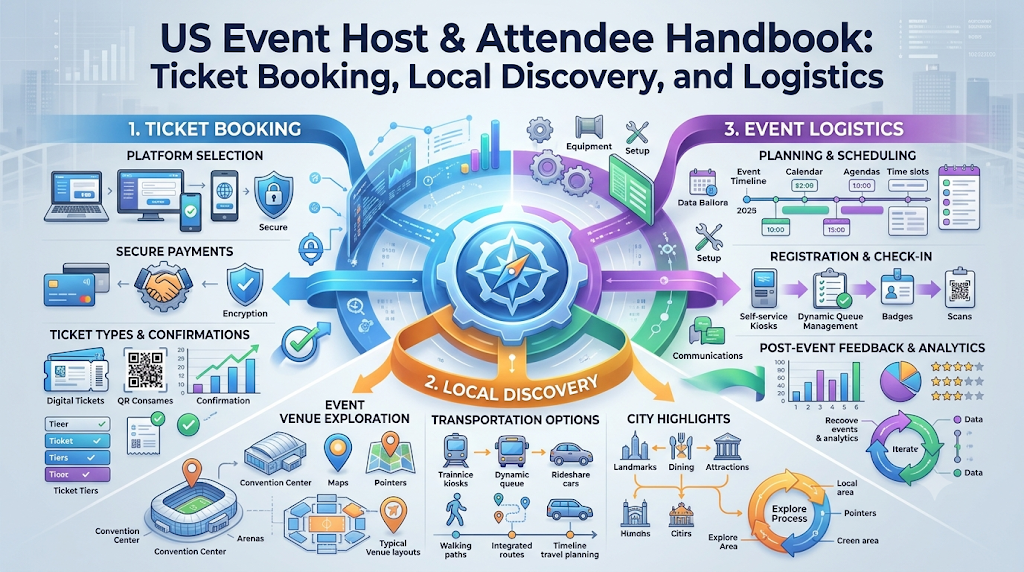
Buying a ticket for a weekend concert, industry conference, or neighborhood street fair in any American city takes only a few seconds online. Digital booking portals have largely replaced physical box office windows, giving venue operators and independent hosts complete oversight of ticket inventory, attendee data, and gate entry. This guide walks through the practical side of modern US event ticketing—explaining how guests uncover local happenings and how organizers handle backend logistics from initial setup to door check-in.myeventsnow.us
Understanding Event Discovery and Digital Ticketing
Digital ticketing replaces paper vouchers with instant electronic passes. When an attendee buys admission online, the hosting platform registers the transaction, adjusts available seat inventory, and generates a mobile pass equipped with a scannable barcode or QR code. For buyers, this removes shipping delays and lost paper stubs. For venue coordinators, it provides a live dashboard tracking gross revenues, ticket distribution, and expected gate arrivals.
Why Digital Event Management Matters Across US Markets
Running public or private gatherings in US markets requires meeting audiences on the digital channels they check daily. Paper flyers and basic calendar listings can no longer support modern venue logistics or match current consumer buying habits.
Advantages for Attendees
- Quick online checkout using a smartphone or web browser.
- Immediate access to seating maps, pass inclusions, and door schedules.
- A single mobile hub to store passes across multiple events.
Advantages for Event Hosts
- Early capital flow from advance sales to fund venue rentals and production costs.
- Automated email updates to share directions, parking instructions, and venue rules.
- Fast entrance lines using tablet or phone scanning tools.
Advantages for Regional Businesses
- Increased customer traffic for nearby restaurants, public transit, and hotels.
- Higher visibility for local performers, non-profits, and independent venues.
Primary US Event Categories
- Live Music and Concerts: Touring bands, club gigs, and multi-day outdoor festivals account for a huge portion of online ticket purchases across the country.
- Comedy and Theater Performances: Stand-up dates, touring Broadway shows, and regional plays rely on assigned seating algorithms to fill halls efficiently.
- Professional Conferences and Expos: Industry conventions, executive summits, and networking meetups manage attendance through multi-tier registration badges.
- Skill Workshops and Educational Sessions: Cooking classes, tech bootcamps, and craft workshops cap registration tightly to ensure hands-on instruction.
- Civic and Cultural Gatherings: Block parties, holiday parades, and charity events bring communities together using open-access or low-cost passes.
Practical Ways to Find Upcoming Events in the USA
- Filter regional event directories by city, date range, or specific interest area.
- Check venue social feeds and local bulletin channels for early ticket drop announcements.
- Join targeted city event newsletters to receive weekly summaries of trending local activities.
Finding Local Activities Nearby
- Enable device location settings on your phone browser to see active events near your current location.
- Enter direct search phrases like events near me to surface live venue schedules nearby.
- Narrow your search by distance, ticket price, or category like nightlife or family entertainment.
- Browse same-day or weekend listings to lock in spontaneous weekend plans.
- Bookmark event pages within your profile to coordinate details with group members later.
Event Hubs: New York City and Beyond
Metropolitan centers across North America maintain constant schedules of public and private gatherings. New York City leads with historic Broadway stages, intimate jazz cellars, and massive convention halls. On the West Coast, Los Angeles draws crowds to outdoor amphitheaters and film screenings, while Chicago stands out for summer music festivals and international trade expos. Other major event markets include Miami, Austin, Seattle, Boston, and Atlanta, each supported by digital booking systems.myeventsnow.us
Step-by-Step Online Ticket Purchase Workflow
- Search: The buyer finds an event using location filters or topic searches.
- Review: The buyer checks door times, age policies, and venue guidelines.
- Selection: The buyer chooses the desired ticket count and admission level.
- Data Input: The buyer fills out basic attendee fields on the checkout screen.
- Payment: The buyer completes the transaction using a credit card or mobile wallet.
- Pass Delivery: The system sends an email confirmation containing scannable mobile pass codes.
Breakdown of Event Admission Tiers
| Pass Type | Target Audience | Primary Features |
| General Admission | Budget-conscious attendees | Access to open standing floors or unreserved seating areas |
| Reserved Seating | Groups and families | Specific assigned section, row, and seat numbers near the stage |
| VIP Packages | Dedicated supporters | Perks like early hall access, exclusive merch, or lounge entry |
| Early Bird Tiers | Early planners | Discounted ticket rates during initial promotional windows |
Defining an Event Ticketing Platform
An event ticketing platform USA acts as a digital storefront where hosts publish listings, assign ticket prices, and collect payments securely. The platform monitors real-time inventory, processes transactions, and generates mobile passes. For buyers, these portals act as a single destination to discover, evaluate, and purchase entry for events across their city.
Defining Event Registration Software
Event registration software USA captures detailed guest information long before doors open. Going beyond basic payment handling, registration tools allow event organizers to create custom sign-up forms to collect dietary requirements, company affiliations, or session choices. The system automates confirmation notices, sends timely event reminders, and builds master check-in rosters for event day.
Steps to List an Event Online
- Account Setup: Open an organizer profile on a digital event platform.
- Content Input: Add the official title, clear description, and high-resolution visual graphics.
- Logistics Details: Enter exact event dates, door schedules, and full street addresses.
- Inventory Configuration: Define ticket tiers, pricing levels, and total capacity limits.
- Publication: Publish the event page live and share the link across marketing channels.
Proven Strategies to Drive Online Ticket Sales
- Write clear descriptions detailing parking access, schedule timelines, and recommended arrival times.
- Share visual previews and short video clips across social media networks.
- Introduce early bird pricing tiers to secure early bookings and offset initial production costs.
- Team up with local businesses, media partners, or regional creators to widen reach.
- Send targeted email notices and early access links to past event attendees.
- Review sales dashboards regularly to fine-tune promotional ad spend based on real-time booking trends.
Understanding Event Management Software
Event management software USA combines ticket distribution, schedule management, guest communication, and financial reporting into one central system. Operations teams can track sales momentum, monitor live gate check-in counts, and export attendee rosters for post-event analysis. Consolidating these operational tasks minimizes administrative errors and ensures complex events run smoothly.
How MyEventsNow USA Supports Event Ecosystems
MyEventsNow USA connects event organizers with prospective attendees through a single online discovery market.
Value for Attendees
- Locate upcoming events in New York City and major metro regions nationwide.
- Filter active event lists by category, date range, and location.
- Complete online event ticket booking USA with immediate digital pass delivery.
- Explore varied entertainment options ranging from music festivals to professional workshops.
Value for Organizers
- Publish activities using straightforward page creation workflows.
- Sell event tickets online using customized admission tiers and pricing strategies.
- Collect custom registration information and manage attendee updates from one dashboard.
- Access integrated management features designed to expand local audience reach over time.
User Scenarios in Action
- Local Music Fan: Alex wants to find live indie music in New York City this Saturday. He browses an event portal, selects a venue show, purchases a general admission ticket, and downloads the mobile pass to his phone in under three minutes.
- Workshop Organizer: Priya is hosting a technical workshop for sixty software engineers. She uses registration software to set up custom questions regarding coding experience levels, gathering background details while automatically sending calendar invites.
- Theater Production Team: A regional theater group needs to manage entry for a weekend run. They publish the show online with assigned seating maps, share the booking link on social channels, and scan digital passes at the auditorium doors using a tablet.
- Non-Profit Foundation: A community group plans a charity 5K. They configure free spectator passes alongside paid runner registrations, using automated messaging tools to send pre-race details about packet pick-up times and parking.
Platform Evaluation Criteria
| Consideration | Value for Attendees | Value for Organizers |
| Discovery Functionality | Quick search filters for local events | Organic visibility across web searches |
| Custom Sign-Up Forms | Simple, clean checkout screens | Flexible data capture for guest rosters |
| Mobile System Integration | Instant phone pass retrieval | Fast smartphone scanning tools at doors |
| Ticket Option Support | Flexible choices across price points | Capability to run early bird or VIP tiers |
| Communication Tools | Instant transaction confirmation | Bulk messaging options for event updates |
Critical Operational Errors to Avoid
- Delayed Event Publishing: Launching an event page too late drastically reduces marketing windows. Always publish pages weeks or months ahead of time.
- Vague Listing Details: Omitting details about age limits, door times, or parking causes guest frustration. Include complete logistical information on the main listing page.
- Neglecting Mobile Users: Most buyers complete purchases on mobile devices. Test your entire checkout workflow on smartphone screens before launching.
- Skipping Pre-Event Reminders: Forgetting to send event updates increases drop-off rates. Send automated reminder emails with directions prior to the event date.
- Ignoring Real-Time Sales Metrics: Not tracking booking trends leaves you blind to weak demand. Review transaction reports daily to adjust marketing efforts.
- Overcomplicating Checkout Forms: Requiring too much information during purchase causes cart abandonment. Keep mandatory fields limited to essential contact data.
- Poor Gate Check-In Preparation: Unprepared entry desks create long lines at venue doors. Set up scanning hardware and verify wireless connectivity well before doors open.
- Omitting Post-Event Surveys: Failing to collect guest feedback prevents operational improvement. Send brief post-event surveys to gather constructive input for future shows.
Frequently Asked Questions
1. How do online ticket purchases work for upcoming events?
Find an event on a digital directory by searching your location or preferred category. Select your ticket tier, complete the checkout form fields, and pay using a credit card or digital wallet. Your entry pass arrives in your email inbox immediately.
2. Can I locate free local events on ticketing portals?
Yes, many ticketing directories feature free community gatherings, educational lectures, and local cultural festivals. Apply price filters during your search to display free events in your city.
3. How do event hosts receive their ticket sales revenue?
Platforms transfer funds directly to the organizer’s connected bank account. Transfer schedules vary based on platform terms, generally processing shortly after ticket sales occur or after the event concludes.
4. What happens if I misplace my digital event pass?
Log into the account you used on the ticketing portal to re-download your digital passes. You can also search your email account for the original confirmation receipt sent after purchase.
5. Can organizers set up multiple ticket tiers on a single event listing?
Yes, digital event software lets managers set up various pricing tiers on one page. You can offer general admission passes, discounted early bird tickets, student options, or VIP packages.
6. Are online event ticket transactions secure?
Reputable ticketing platforms process payments through encrypted financial gateways to safeguard personal data. Always make purchases through verified event portals to avoid fraudulent sellers.
7. How far in advance should an event be published online?
Smaller workshops or community meetups should go live 2 to 4 weeks prior to the date. Major productions like multi-day conferences or large concerts should be published 2 to 6 months in advance.
8. How does a ticketing platform differ from registration software?
Ticketing platforms center primarily on distributing admission passes to general consumer markets. Registration software focuses on gathering detailed attendee background data, handling custom forms, and managing detailed guest lists.
9. Is it possible to transfer an event ticket to someone else?
Most digital ticketing platforms allow user-to-user ticket transfers through account settings. Always check specific event policies, as high-demand shows sometimes restrict transfers to curb unauthorized reselling.
10. How do door staff scan digital passes at venue entrances?
Staff members use mobile devices or tablets running scanner applications to read QR codes displayed on guest smartphones. Scans update the central attendance database instantly, preventing duplicate entries.
11. What makes New York City a primary market for event platforms?
New York City features a high density of venues, business hubs, and entertainment districts operating daily. Its large resident population and tourist traffic make web discovery essential for finding available tickets.
12. How does event management software improve the attendee experience?
It delivers simple checkout steps, fast email receipts, automated pre-event directions, and quick door check-in, ensuring a smooth experience from purchase to performance.
Conclusion
Digital ticketing channels have transformed how Americans discover local entertainment and how hosts execute venue operations. Online portals give attendees quick access to city happenings while equipping event managers with robust tools for listings, sales tracking, and gate control. By establishing clear event pages early, avoiding door management mistakes, and choosing adaptable software, organizers can run seamless events of any size. Whether you are looking for upcoming events in New York City or organizing a multi-city conference, platforms like MyEventsNow USA deliver the core infrastructure to gather people together.myeventsnow.us
Leave a Reply